

Did you know that according to a 2023 McKinsey report, companies that fully integrate AI into marketing and sales see up to 20 percent higher customer satisfaction and significant revenue lift? That is not hype. That is data. So if AI powered campaign planning still sounds experimental, it may be time to rethink that assumption.
Marketing teams today are juggling timing, targeting, and topic selection across multiple platforms. The margin for error is small. AI powered campaign planning gives brands a way to reduce guesswork and move with more confidence. Instead of relying on instinct alone, marketers can combine creativity with real time data, predictive models, and behavioral insights. The result is not just efficiency. It is smarter decisions at every stage of the campaign lifecycle.
Why AI Powered Campaign Planning Is Reshaping Strategy
AI powered campaign planning changes how teams think about structure and sequencing. Rather than starting with a single big idea and pushing it everywhere, brands can test variations, predict engagement, and refine their messaging before major investment.
This approach typically improves four critical areas:
- It analyzes historical campaign performance to identify patterns in engagement and conversion.
- It predicts optimal publishing windows based on audience behavior.
- It clusters audience segments by real interests rather than broad demographics.
- It suggests high potential topics based on search trends and competitor gaps.
An experienced AI PR agency understands that AI is not replacing strategy. It is strengthening it. When combined with human oversight, AI tools can help campaigns launch at the right moment, speak to the right audience, and focus on themes that already show measurable demand.

Smarter Timing Through Predictive Insights
Timing has always been part art and part science. AI shifts that balance toward science without removing the creative instinct. By analyzing engagement signals such as click through rates, time on page, and seasonal spikes, AI powered campaign planning tools forecast when audiences are most receptive.
Instead of publishing on a fixed calendar, marketers can respond to real world signals. For example, predictive analytics may show that certain content performs better on weekday evenings for one segment and weekend mornings for another.
Fact ─ According to HubSpot research, emails sent at optimized times can increase open rates by more than 20 percent compared to randomly scheduled sends.
When you apply this insight to social media, paid ads, and content marketing, the cumulative effect becomes significant. Smart timing increases visibility without increasing budget.
Precision Targeting Beyond Basic Segments
Traditional targeting relied heavily on age, location, and broad interests. AI powered campaign planning goes deeper by examining behavioral patterns and micro signals. It looks at how users interact, what they read, and which formats they prefer.
Below is a simple comparison that shows the difference:
|
Traditional Targeting |
AI Driven Targeting |
| Age and gender based | Behavior and intent based |
| Static audience lists | Dynamic, evolving segments |
| Manual adjustments | Real time optimization |
What makes this powerful is adaptability. AI systems continuously learn from new interactions. If a segment starts engaging with a new topic cluster, campaigns can pivot automatically. That means fewer wasted impressions and stronger alignment with real user intent.

Intelligent Topic Selection That Matches Demand
Topic selection can make or break a campaign. Even strong creative fails when it addresses the wrong theme. AI powered campaign planning tools analyze keyword trends, social conversations, competitor content gaps, and search intent to recommend relevant topics.
Instead of brainstorming blindly, teams can validate ideas with data. For instance, if search volume for a specific problem is rising while competitor coverage remains weak, that signals opportunity.
Did you know that Google processes billions of searches daily, and a significant percentage represent new queries that have never been searched before? AI systems can detect these emerging patterns much faster than manual research alone.
That does not remove the need for editorial judgment. It strengthens it. Marketers can prioritize topics that align with both brand authority and measurable interest, improving both visibility and credibility.
Integrating AI Without Losing Human Judgment
There is a common concern that AI powered campaign planning might over automate strategy. In reality, the most effective campaigns combine machine intelligence with human oversight.
AI can process enormous data sets. It can surface correlations and predict outcomes. It cannot fully understand brand nuance, ethical boundaries, or long term reputation risks. That remains a human responsibility.
To maintain balance, teams often follow this structure:
- Use AI for data analysis, forecasting, and segmentation.
- Keep final creative direction and messaging tone under human review.
- Regularly audit algorithms to ensure alignment with brand values and compliance standards.
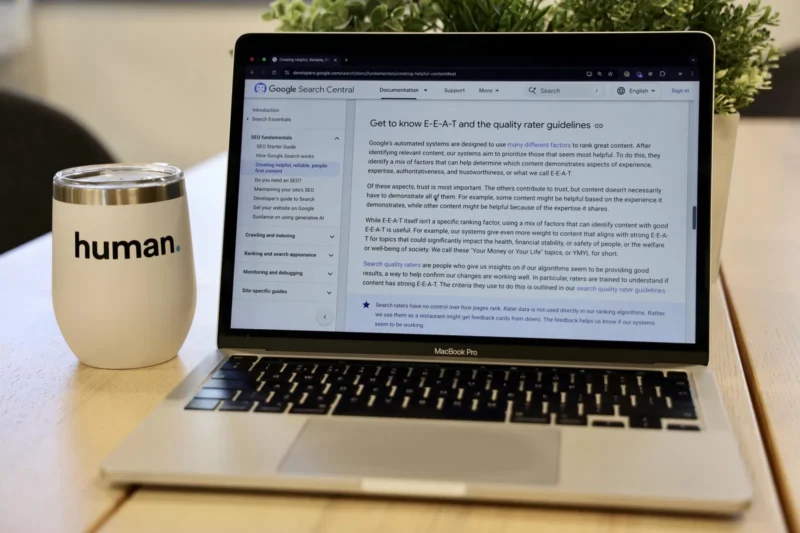
This layered approach aligns with Google E E A T principles. Experience and expertise guide interpretation. Authority is built through consistent, high quality output. Trust comes from transparency and responsible use of technology.
Building Campaigns That Learn and Improve
One of the most valuable aspects of AI powered campaign planning is its feedback loop. Campaigns do not end when they launch. They evolve. Performance data feeds back into the system, improving future recommendations for timing, targeting, and topic selection.
Over time, this creates a compounding advantage. Each campaign becomes smarter than the last. Budget allocation improves. Content becomes more aligned with audience expectations. Decision making grows more confident.
Marketing has always required creativity. Now it also demands agility. AI provides that agility by turning raw data into actionable guidance. Brands that treat it as a strategic partner rather than a shortcut often see the strongest results.
In a competitive digital environment, relying on instinct alone is risky. AI powered campaign planning does not eliminate uncertainty, but it reduces it significantly. When timing is optimized, targeting is precise, and topic selection is data driven, campaigns stop feeling like experiments and start feeling intentional. That shift can make all the difference between noise and measurable impact.