
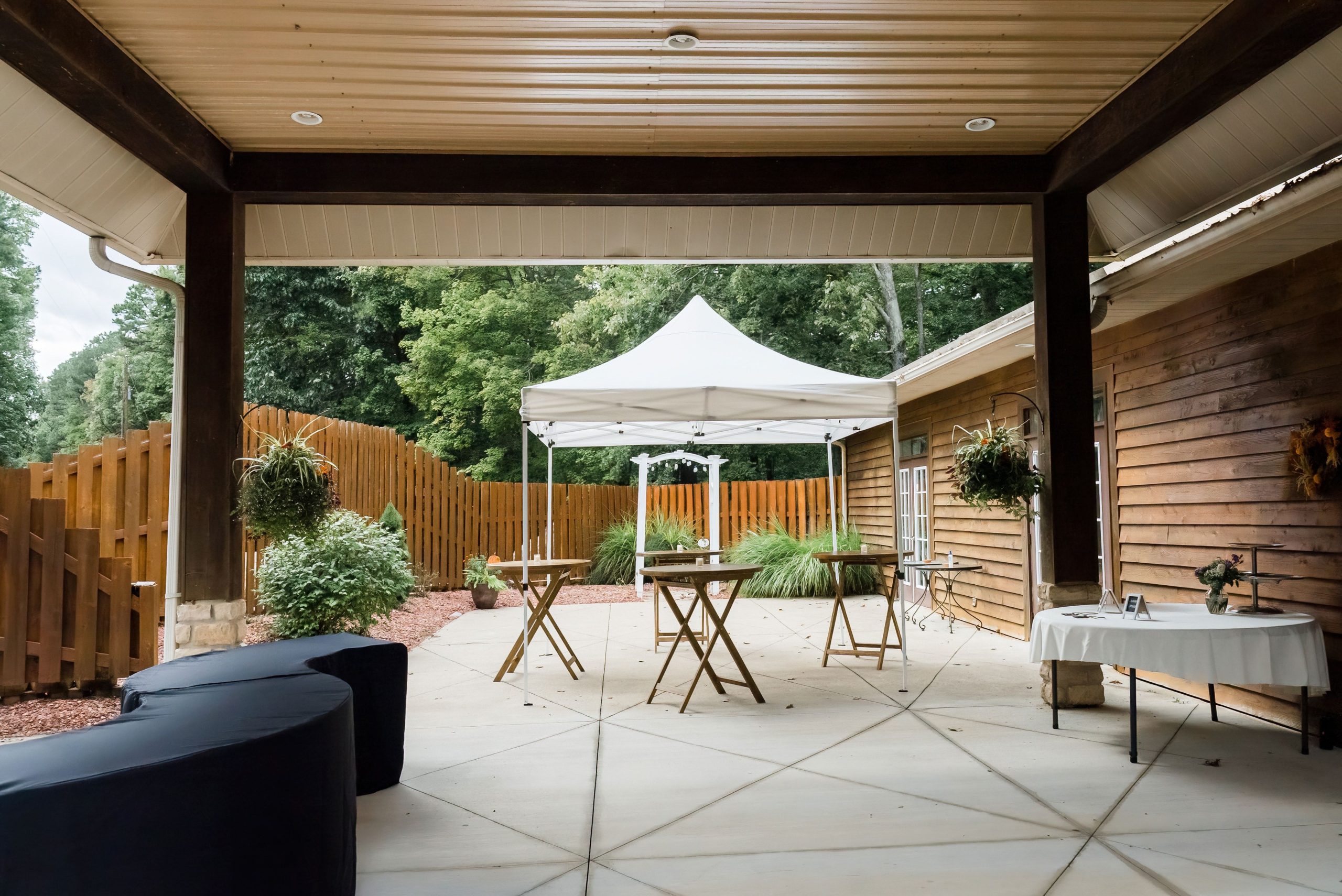
Outdoor venues can make business conversations feel more relaxed than a hotel ballroom, but they also come with challenges that indoor rooms do not have. Wind, sun, uneven ground, noise carrying across open air, and unpredictable crowd movement all affect whether people actually meet and talk. A well-designed outdoor space guides guests into conversations without making them feel herded. The sections below cover the planning decisions that matter most for networking receptions, client hospitality events, and corporate gatherings.
Table of Contents
- Start With the Purpose of the Space
- Divide the Venue Into Clear Zones
- Arrange Seating to Encourage Conversation
- Plan Circulation and Traffic Flow
- Plan for Weather, Shade and Edges
- Handle Heating and Fire Safety
- Design Dining and Refreshment Areas
- Manage Lighting, Sound and Power
- Frequently Asked Questions
- Final Thoughts
Start With the Purpose of the Space
Before choosing furniture or rental equipment, decide what the outdoor area is supposed to do. A chair arrangement that works for a short welcome drink will fail at a two-hour evening reception. Planners often narrow the purpose to one or two primary functions, such as:
- Short introductions during a standing reception
- Longer, more private conversations with clients or partners
- Brand exposure and sponsor interaction
- Quiet recovery space away from presentations or the main stage
- Informal dining that still allows movement between people
Once the purpose is clear, the rest of the design choices become easier. A space meant for quick introductions needs open standing areas and high tables. A space meant for longer discussions needs seating that is comfortable enough to stay in.
Divide the Venue Into Clear Zones
Rather than treating an outdoor area as one large open floor, break it into defined zones. Each zone gives guests a reason to stop and a sense of what to do there. Common zones include:
- Welcome zone: an open entry point with nearby seating or a standing counter
- Conversation zone: sofas or chairs grouped to face one another
- Refreshment zone: drinks and food placed near the edge of the space so they do not block walkways
- Brand zone: a backdrop, display, or information counter for sponsors or partners
- Recharge zone: quieter seating set slightly away from the busiest activity
Not every event needs all five. Select only the zones that support the event’s purpose. Tents, planters, modular furniture, and lighting can separate zones without building walls, which keeps sightlines open and preserves the feeling of being outdoors.
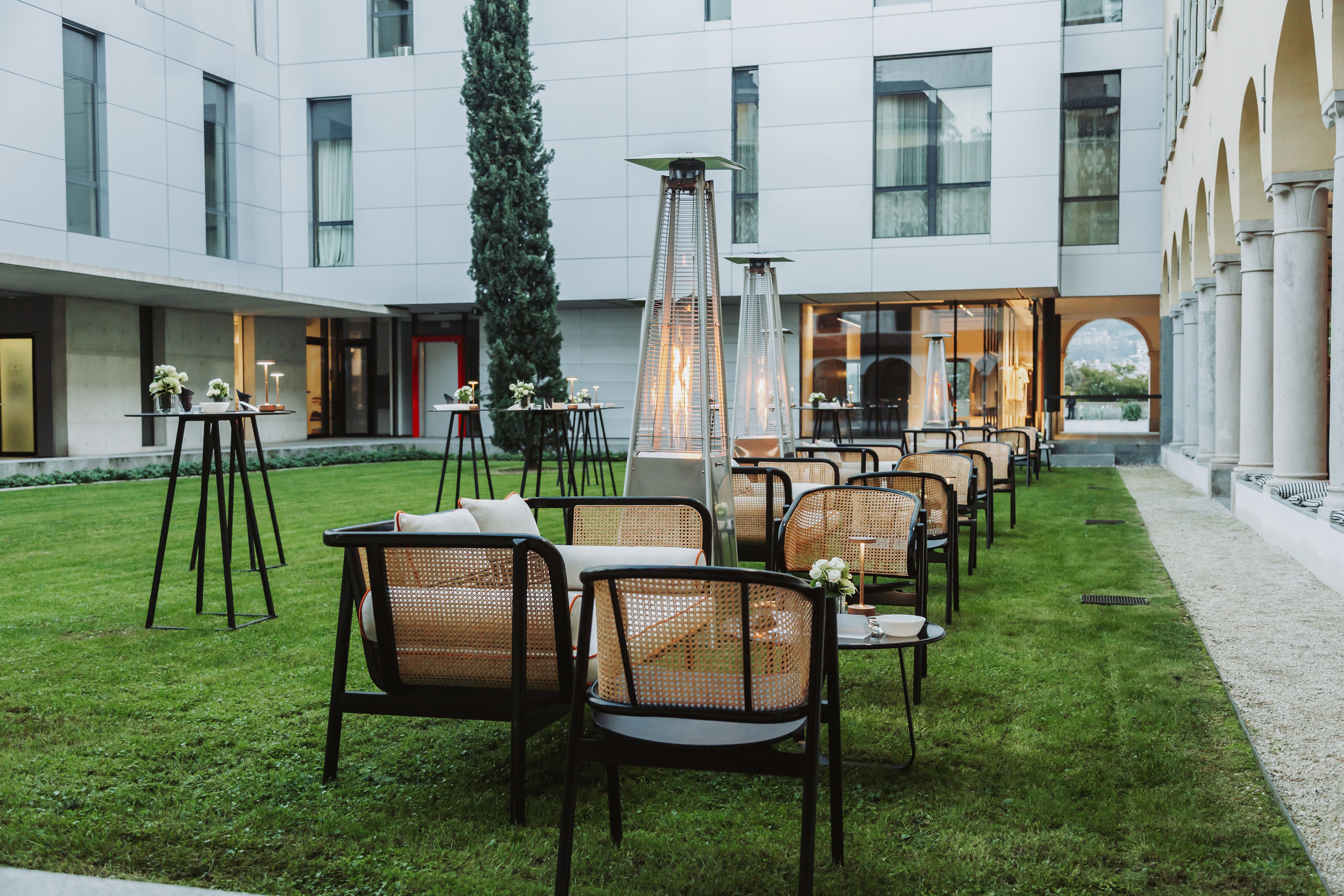
A courtyard divided into seating groups keeps conversation areas distinct while staying open.
Arrange Seating to Encourage Conversation
Seating is one of the strongest influences on how people behave at an outdoor event. Rows of chairs facing a single direction tend to produce small, closed circles of people who already know each other. Clustered arrangements do the opposite. Semicircular or angled groupings make eye contact easier and let newcomers join a conversation without an awkward introduction.
Mixing seating formats helps different types of attendees find a comfortable spot. The table below compares common options.
Two more points matter here. First, offer some seats that are not the most visible, so that people who prefer a quieter pace have somewhere to go. Second, avoid placing every seat at once. Leaving a few empty chairs in the design often makes the space look more inviting, while a fully packed layout can make it feel like a waiting room.
Plan Circulation and Traffic Flow
Good circulation keeps the event moving and prevents bottlenecks near bars, restrooms, or the stage. Map the main route guests will take from entrance to exit, then place seating groups slightly back from that route rather than directly on it. Useful principles include:
- Provide more than one entry point into busy networking areas
- Leave enough space between furniture groups for people carrying drinks or bags
- Create paths that let guests leave a conversation without cutting through another one
- Keep service routes clear so staff can replenish food and clear tables without interrupting guests
Circular or figure-eight routes work well in larger spaces because they keep people moving past new opportunities rather than funneling them into a single corner.
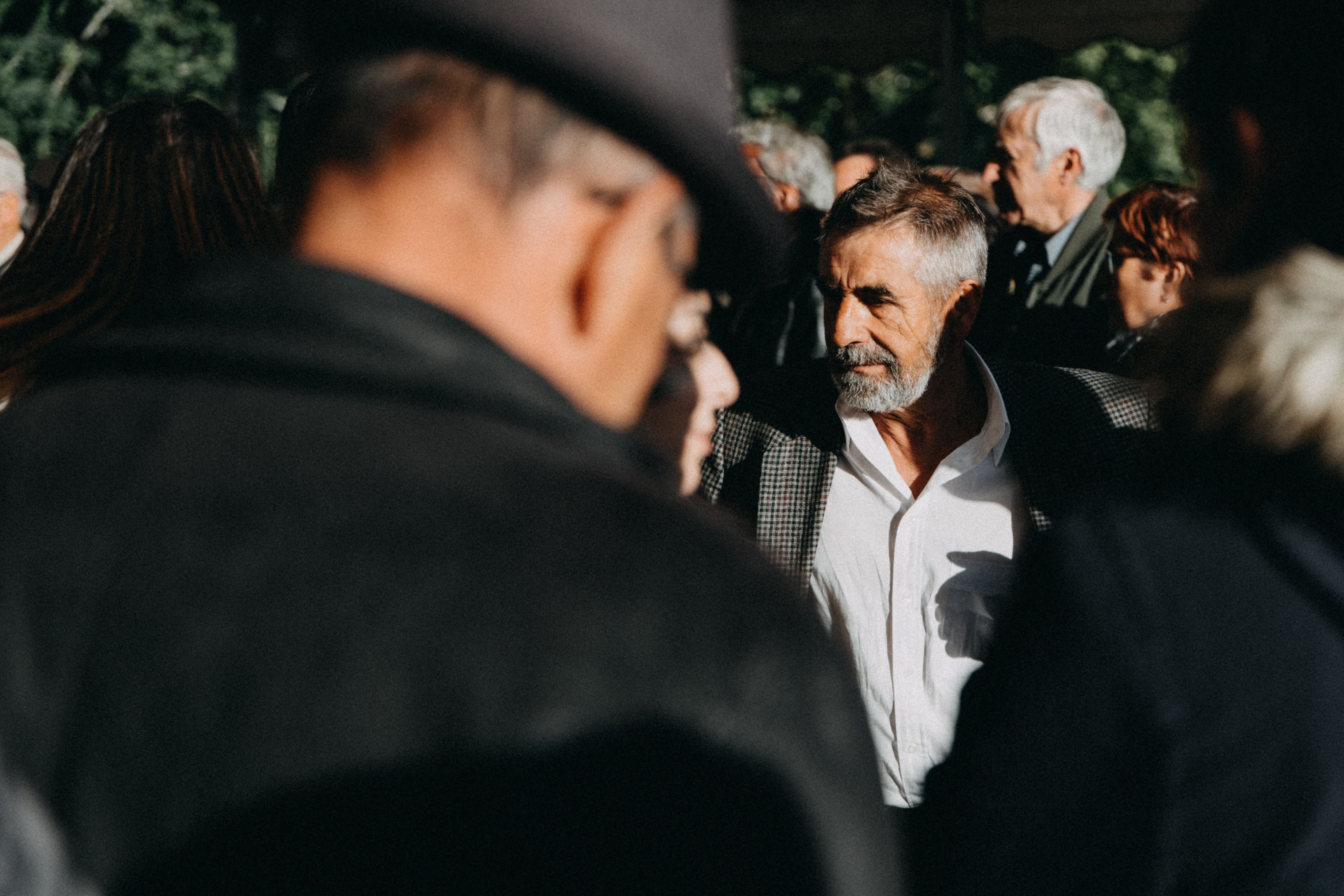
Open paths between groups let a crowd mix without becoming congested.
Plan for Weather, Shade and Edges
Weather is the variable most likely to change an outdoor event at the last minute. Build a backup plan into the design from the start:
- Identify covered areas such as pavilions, pergolas, or tents that can hold part of the crowd
- Choose a nearby indoor space or a portable canopy as a fallback
- Provide shade for midday or early evening events, since glare and heat reduce how long people stay
- Use wind-resistant anchoring for tents, umbrellas, and lightweight furniture
If the space sits on a raised deck or rooftop, edge protection becomes part of the design, not just a safety requirement. Many venues choose composite balustrades because the material generally needs less upkeep than natural timber, and slim profiles keep views open toward a skyline or garden. Whatever the material, the railing height and spacing should meet local building rules, and furniture should be kept a safe distance from the edge.
Handle Heating and Fire Safety
Patio heaters extend the season for evening networking, but they carry real fire and carbon monoxide risks. Fire safety codes generally require that portable heaters be listed by a recognized testing body, used according to the manufacturer’s clearances, and kept away from anything that can burn. The NFPA outdoor heater fact sheet summarizes the core requirements for propane and electric units in assembly settings. Practical rules to apply on site include:
- Never use propane heaters inside a tent, marquee, or enclosed structure, because of carbon monoxide risk
- Keep combustible materials such as umbrellas, tablecloths, and decorations at a safe distance from the heater
- Place heaters on level, stable ground, never on grass or near the edge of a raised platform
- Store gas cylinders outdoors, upright, and secured against tampering
- Keep exits and firefighting equipment unobstructed, and keep extinguishers easy to reach
- Turn heaters off and let them cool before moving them, and never leave them unattended
Local rules differ, so confirm requirements with the fire authority that covers your venue. For example, Fire and Rescue NSW’s guidance on portable outdoor gas heaters sets out specific checklists for ventilation, storage, and servicing that many planners find useful as a starting point.
Design Dining and Refreshment Areas
Food and drink are natural conversation starters, but they can also create congestion if they are placed poorly. Dining-height tables suit longer meals, while standing-height tables and bar counters support quick exchanges. A few practical points help:
- Set tables with enough room for people to stand behind a chair without blocking a path
- Use a centerpiece or greenery to add warmth, but keep it low enough that guests can see across the table
- Place food stations away from the main entrance so queues do not spill into walkways
- Offer a mix of seated and standing options so guests can choose their level of commitment
Mixing a formal dining table with lounge seating nearby lets guests move from a meal to a more relaxed conversation without changing spaces.
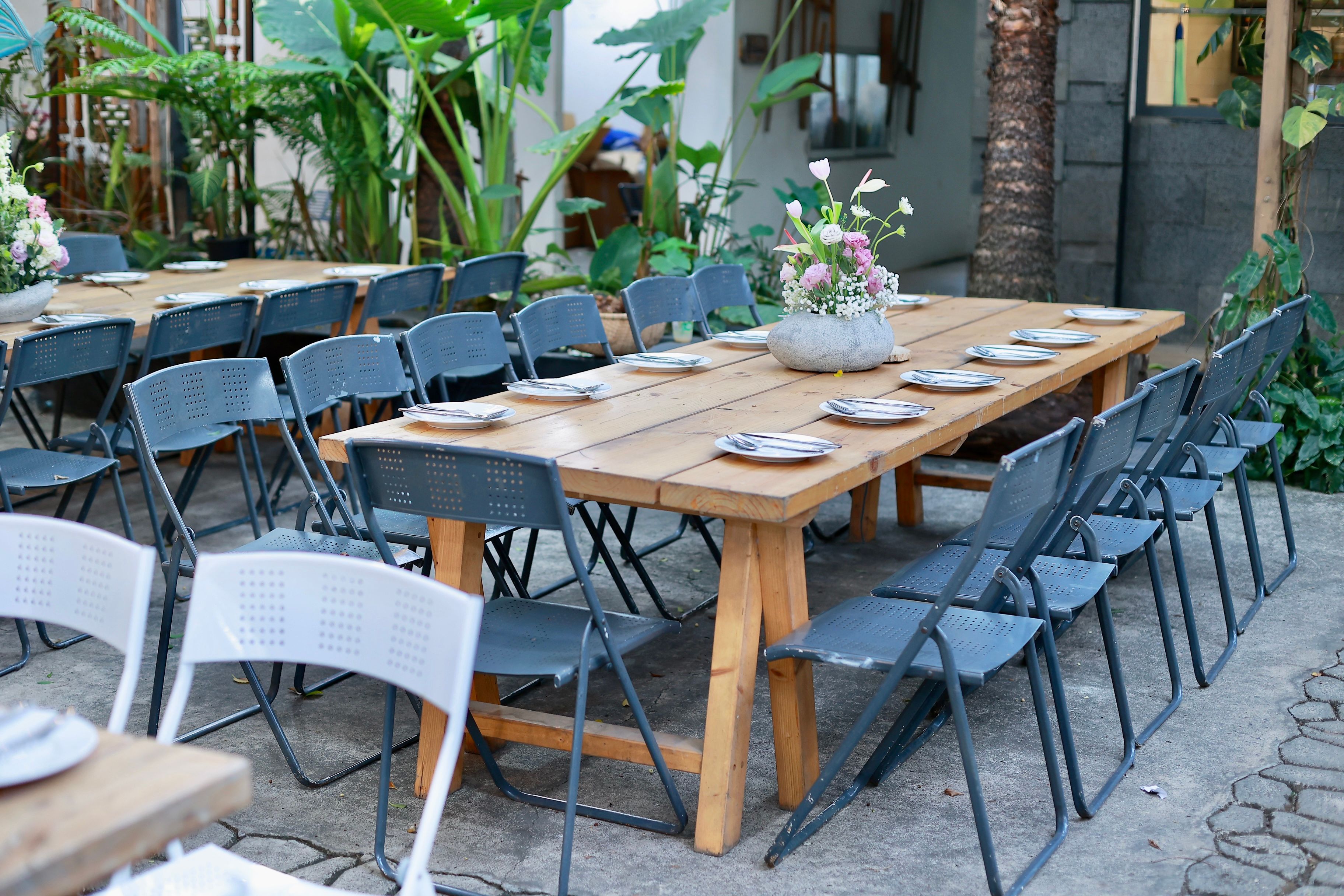
A set dining table with greenery adds comfort while leaving room for conversation.
Manage Lighting, Sound and Power
Lighting shapes both mood and safety. Layer it so that paths are clearly lit at low level, while seating areas get softer ambient light. Avoid glare directly into faces, which makes conversation harder. Sound matters as much as light: if the music or speakers are louder than the conversation level, people will leave early. Position speakers away from quiet zones and keep the volume where guests can talk comfortably.
Plan power and connectivity before the event. Attendees will want to charge devices and stay connected, so weatherproof outlets, charging stations, and reliable wireless coverage should be part of the layout. Cables should be routed along edges and secured so they do not become trip hazards.
Frequently Asked Questions
How many seats should an outdoor networking event have?
Plan for roughly a third to a half of guests to be seated at any one time, with the rest standing or moving. Leaving a few empty seats across the space helps the venue feel open and welcoming.
What is the most common mistake in outdoor event layouts?
Designing only for extroverts is a frequent problem. Provide quieter seating pods and small conversation prompts so that people who prefer a calmer pace can still take part.
Do outdoor heaters need special planning for corporate events?
Yes. Heaters need clearance from combustibles, stable placement, safe fuel storage, and a check with local fire rules. Never use propane heaters inside tents or enclosed structures.
Final Thoughts
An effective outdoor networking space is less about decoration and more about how people move, sit, and talk. Start with the purpose of the event, divide the area into zones, arrange seating in clusters, and keep paths open. Build in weather backups and safety measures from the beginning, and review the layout during a walkthrough before guests arrive. When the space works well, people stop checking their phones and start the conversations the event was designed to create.